

By Larry Guido
In the quiet moments of prayer, many of us have echoed the heartfelt frustration of a young boy named Danny. Kneeling by his bed, Danny poured out his concerns to God: his brother’s unemployment, his mother’s failing health, and his father’s stalled promotion. “You know, God,” Danny prayed, “I’m really getting tired of praying for my family and not getting any results. Have you quit listening to me?”
Have you ever felt like that? Most of us have. We bring our lists of needs and desires before the Lord, only to wonder why the answers seem delayed or different from what we expected. Yet Scripture offers profound insight through the Apostle John: “And we can be confident that He will listen to us whenever we ask Him for anything in line with His will. And if we know He is listening when we make our requests, we can be sure that He will give us what we ask for” (1John 5:14-15).
The key, as John emphasizes, is alignment with God’s will—not our own wants. There is a dramatic difference between the two. Too often, our prayers reflect selfish desires or immediate relief rather than what we truly need to grow into the people God has designed us to be. The ultimate test of any prayer becomes: “Lord, give me this for Your sake, in Your name, for Your will.”
When the path feels dark and God seems distant, He is often closest, shaping us through the waiting. As the psalmist reminds us, “Even though I walk through the darkest valley, I will fear no evil, for you are with me” (Psalm 23:4). In those moments of apparent silence, we learn to seek not just answers, but the Giver Himself.
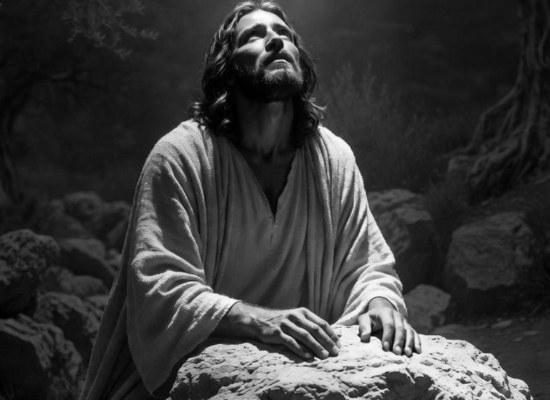
Jesus Himself modeled this perfectly in the Garden of Gethsemane. Facing the cross, He prayed, “Father, if you are willing, take this cup from me; yet not my will, but yours be done” (Luke 22:42). In agony, He chose the Father’s will over His own comfort. His obedience led to our salvation, demonstrating that true strength arises not from getting what we want, but from yielding to what God knows is best. When we face difficult decisions—whether in family struggles, career choices, or ministry callings—we can draw on this same resolve. God’s will may not always feel easy, but it equips us with His strength: “I can do all this through him who gives me strength” (Philippians 4:13).
An astronomy professor once challenged his class with a simple question: “When can you see the farthest—at night or in the daytime?” The students unanimously replied, “In the daytime.”
“Wrong,” the teacher corrected. “In the daytime you see the sun. But at night you can see the stars, and the stars are millions of times farther away than the sun.”

This story invites us to look beyond the immediate glare of our circumstances. In the “daytime” of comfort or busyness, our vision is limited to what is close and familiar. But in the darkness—when trials obscure the sun—we gain perspective to see farther into God’s eternal purposes. Many of us gaze beyond the present to escape pain or to dream of better days for our families.
Yet… God calls us to something greater: a vision of His sovereignty that empowers bold obedience. Consider the prophet Isaiah. In the year King Uzziah died, amid national uncertainty and loss, Isaiah “saw the Lord sitting on a lofty throne” (Isaiah 6:1). This vision came not in a time of stability but in darkness and transition. It was a message few wanted to hear, filled with difficult moments and potential rejection.
Yet Isaiah’s response rings through history with courage: “I heard the Lord asking, ‘Whom should I send as a messenger to this people? Who will go for us?’ I said, ‘Here I am. Send me’” (Isaiah 6). He didn’t negotiate terms or seek an easier path. Empowered by a fresh vision of God’s greatness, Isaiah embraced God’s will over his own comfort.
We need Isaiah’s perspective today more than ever. In a world of shifting values, personal ambitions, and cultural pressures, God calls His people to serve as messengers of truth, grace, and hope. Will we align our lives with His will?
Finding God’s will begins with prayerful surrender, Scripture meditation, and community counsel. It involves asking not “What do I want?” but “What does God desire for my life and for His glory?” The way is often difficult, but His presence illuminates the darkness, and His strength sustains us. As Paul wrote, “I have been crucified with Christ and I no longer live, but Christ lives in me. The life I now live in the body, I live by faith in the Son of God, who loved me and gave himself for me” (Galatians 2:20).
Being brave enough to live out God’s revealed will requires trust. God does not abandon us in the dark; He reveals the stars—His vast, sovereign plan. What stars might God reveal to you in the night? Will you answer, “Here I am. Send me”?